

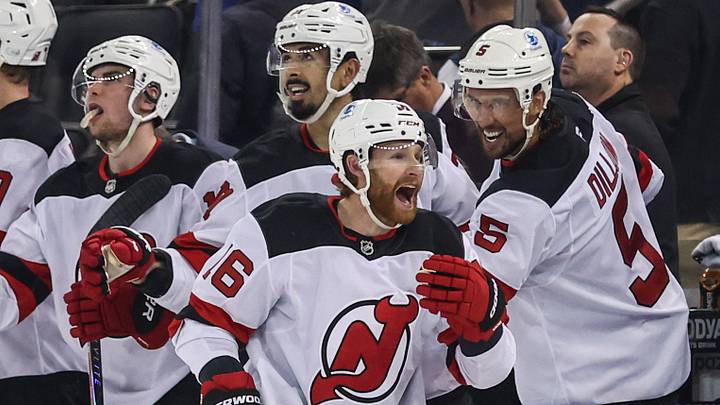
Connor Brown probably wasn't supposed to be one of the New Jersey Devils' most important forwards last season. When Tom Fitzgerald signed Brown to a four-year, $12 million contract last summer, most expected him to come in as an overpriced veteran winger who could kill penalties and chip in some secondary scoring.
Fitzgerald had grown a reputation of paying extra for Stanley Cup experience, and Brown had been to two straight Stanley Cup Finals with the Edmonton Oilers. Giving him four years might give people pause, but Brown was well worth his price tag in his first season.
Brown finished his first season in New Jersey with 18 goals and 43 points in 75 games. That tied the career-high 43 points he established with the Ottawa Senators in 2019-20, and it came at age 32. Brown played way higher than many expected him to rise.
After the Olympic break, Brown took a bigger role in the lineup. He became a legitimate offensive weapon alongside Jack Hughes and Jesper Bratt. In 25 games following the break, Brown scored eight goals and added 21 points. That's a 32-goal, 71-point pace over a full 82-game season.
If Brown isn’t going to play alongside Hughes this season, those numbers obviously aren't sustainable, but they show just how much offense Brown was capable of generating when he was given an opportunity alongside elite talent.
Connor Brown can still contribute in a bottom-six role
That's why it's hard to dismiss Brown's breakout as a fluke. He has always had the skating ability. He's smart away from the puck. And he’s been used to playing with superstar forwards, but as he enters his mid-30s, the best spot in the lineup is probably on the bottom six. The top-six spots might go to Brown at first, just for the chemistry he built with Hughes, but most would want Anthony Mantha, Arseny Gritsyuk, or Dawson Mercer (barring a massive bounce-back) to take those spots.
With so many new additions on the Devils, Brown makes sense for some clarity in this bottom six. We know what he is going to provide, even if moving him down there means knowingly dropping his point production. He has multiple roles on this offense and defense, so playing him alongside Cody Glass makes sense in Sheldon Keefe’s lineup.
 Add us as a preferred source on Google