

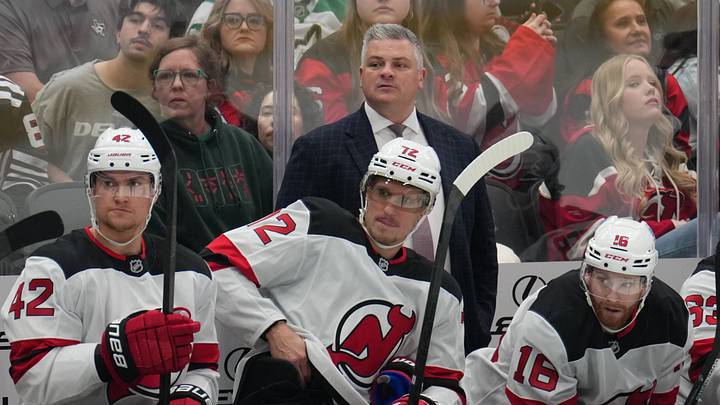
Over the past few years as head coach, Sheldon Keefe has relied too much on perimeter play. On the power play, the Devils pass the puck around too much, looking for Dougie Hamilton and Luke Hughes to consistently generate offense. Keefe needs to amend that approach at even strength and on the power play. This team has too many high-octane forwards to waste their prime talent by having them play like pass-first playmakers.
We saw fresh legs, defensive-zone coverage, and the courage to win against the Flyers on opening night. The Devils looked committed to their assignments and willing to compete. The last game, however, was uglier than looking at a group of spooky Halloween characters at a haunted hayride. Those hayrides must be banished at the Prudential Center this season.
That contrast is exactly why the Devils need to be evaluated closely. This team doesn't lack talent. The question is whether the system consistently puts that talent in positions to succeed.
The Devils need more offensive-zone penetration. They need to attack the slot, utilize the bumper, get bodies toward the net and force opposing defenders to collapse. Moving the puck quickly is good, but puck movement has to accomplish something. If the Devils simply move the puck around the perimeter, opposing defenses can remain organized and comfortable.
The New Jersey Devils need to stay on top of their situation
Sunny Mehta, as an analytics guy with a scouting background, should recognize that. He needs a coach who understands that generating offense isn't about accumulating possession around the outside. It is about manipulating the defense until the middle of the ice opens up.
That brings me back to Sun Tzu's famous words from The Art of War, Chapter 3:
"If you know the enemy and know yourself, you need not fear the result of a hundred battles."
Two companion lines are also worth remembering:
"Know the enemy, know yourself; your victory will never be endangered," and "He who knows when he can fight and when he cannot, will be victorious."
For hockey, the message is simple. Sheldon Keefe must understand how each opponent plays, how they intend to defend the Devils, and how New Jersey can use its own strengths to exploit those weaknesses.
The Devils are built around speed and skill. Their forwards can attack off the rush and create chances, while Hamilton and Hughes give them another offensive layer from the back end. So why should the defensemen continually be asked to manufacture the offense?
Hamilton and Hughes should be weapons within the attack, not the players the entire attack revolves around.
The forwards need to make defenders react. If the puck goes to the bumper, somebody has to collapse. If a forward attacks the slot, somebody has to step up. If a player drives the net, somebody has to protect the crease. Those decisions create openings that New Jersey's shooters can exploit.
The Devils have enough offensive talent to make teams pay when they are forced into those decisions. But the attack has to get inside the defensive structure first.
This is where Keefe's coaching becomes critical. A good coach cannot simply run the same offensive structure against every opponent and expect every defense to react identically. Some teams will give New Jersey space off the rush. Others will clog the middle. Others will aggressively pressure the puck. The Devils have to recognize those differences and adjust.
That is Sun Tzu's philosophy in practical terms: know yourself, know your opponent and know when to change the way you fight.
This roster has no excuse for looking consistently stagnant offensively, especially now. The Devils have spent years building toward this window. Their best players are in or approaching their prime, and they should be competing for more than a playoff berth.
That puts Keefe under pressure. It also puts Ted Donato under pressure. Sunny Mehta hired Donato while inheriting Keefe. If Keefe continues to struggle with the team's offensive identity, an early-season coaching change should at least be under consideration.
That doesn't mean firing a coach after one ugly game. It means evaluating the process.
Are the Devils generating dangerous chances? Are the forwards getting into the middle? Is the power play forcing penalty killers to move? Are the forwards creating offense, or are Hamilton and Hughes being asked to solve everything from the blue line? And most importantly, does the team's style resemble the roster Mehta believes he has built?
Mehta isn't afraid to shake things up and hold players and personnel accountable if a falling-out occurs over the stylistic approach. He grew up during the Lou Lamoriello glory years while developing a modern perspective through analytics, scouting, and his time as an AGM with Bill Zito in Florida.
That combination matters. Analytics can tell Mehta what is happening. Scouting and hockey knowledge can help explain why.
If the Devils repeatedly generate perimeter possession without enough dangerous interior offense, that should not simply be written off as bad luck. It should prompt questions about the system producing those results.
Their high-octane forwards need to attack. The bumper needs to become a weapon. The slot needs to become dangerous. Net-front presence needs to matter. Puck movement needs to create openings instead of becoming an end in itself.
And once the forwards force the defense to collapse, that's when Hamilton, Hughes, and the Devils' other shooters should punish them.
Because playoff hockey exposes teams that rely too heavily on the perimeter. Defenses tighten, space disappears and opponents become more disciplined. If the Devils cannot consistently create interior offense during the regular season, they will eventually face the same problem when the stakes become higher.
If Sheldon Keefe makes the necessary adjustments, he deserves the opportunity to continue leading this team. But if the perimeter problems persist, the power play remains overly dependent on Hamilton and Hughes, and the forwards continue functioning more as distributors than offensive weapons, Mehta should not be afraid to make the difficult decision.
 Add us as a preferred source on Google