

As the New Jersey Devils got Brett Pesce back, it became very clear how much he matters to this roster and how much he was missed. Pesce is a true stay-at-home defender and a lynchpin in the defensive scheme. When he is in the lineup, Coach Brad Shaw’s defensive system works the way it is designed.
The Devils did not immediately fall apart without Pesce. Instead, they slowly started losing games they should have won. Games where they should have secured at least a point turned into regulation losses. Over time, that adds up. The loss of Pesce became even more damaging once Jack Hughes was injured in Chicago. Without their top offensive driver and without their defensive stabilizer, the Devils were forced into playing a style of hockey that exposed their weaknesses.
When you add a strong stay-at-home defenseman who can ease the pace of play and be that security blanket, younger players play with more confidence. They can focus on their game instead of worrying about covering mistakes. That was obvious once Pesce returned. The team looked calmer. The structure looked stronger.
That brings us to the trade deadline.
The New Jersey Devils were reportedly in on the big fish: Quinn Hughes. However, they lost that race to the Minnesota Wild, who came in at the 11th hour and put a take-it-or-leave-it offer on the table.
Tom Fitzgerald has to make strategic utilization moves to improve this roster. This team cannot be built only around Brett Pesce and Jack Hughes. The Devils need external core additions that fit within the cap and address real needs. They need players who help them protect leads, manage games, and play within structure when the ice tightens.
This is not about adding big names for the sake of headlines. It is about fixing what is missing.
It is also important to acknowledge that it is less likely the Devils make a meaningful trade within the division. Divisional trades are difficult, and general managers are usually hesitant to strengthen a direct rival. That reality narrows the field and makes fit and timing even more important.
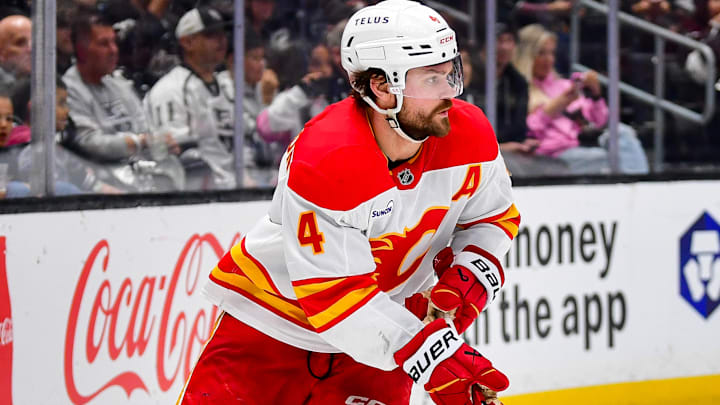
On defense, players like Rasmus Andersson or Mario Ferraro make sense because they are outside the division and fit the Devils' needs. They are capable of playing real minutes, killing plays early, and helping stabilize the backend. The Devils have puck movers. What they need is insulation.
Up front, the Devils should be looking outside the division for a forward who can play responsible minutes and help manage games. Someone who can handle defensive zone work and still contribute when needed. A player in the mold of Brock Nelson or Ryan O Reilly fits that idea better than chasing a divisional option.
The biggest issue is the cap, and that leads to the most important decision of the deadline.
Ondrej Palat has to be moved.
This is not about disrespecting Palat or his playoff history. It is about fit. His $6 million cap hit no longer matches his role on this roster. The Devils already have speed and skill on the wings. What they need is help on defense and down the middle.
Moving Palat creates the flexibility Fitzgerald needs to make real improvements. If Palat is moved, the Devils can realistically add a defenseman with retention and still bring in a forward who helps manage games late. That is how you turn the deadline into an upgrade instead of a shuffle.
Another reason this deadline is so complicated is the number of no-move and no-trade clauses on this roster. Tom Fitzgerald handed out those clauses, and now they limit flexibility when flexibility is needed most.
No-move and no-trade clauses are meant to protect core players. When they are given to veterans who are complementary, they become a burden. They reduce options at the deadline, limit leverage in negotiations, and force management onto fewer, less efficient paths.
If I had a say in this league, no team should be built where more than half, or even a quarter, of the roster carries these clauses. It creates stagnation and removes accountability. It shifts power away from roster construction and toward contract protection.
Contracts like Palat’s are harder to move because of these clauses. Even when a move makes hockey sense, it becomes more complicated because the team loses control over timing and destination. That matters at the deadline, especially when the Devils are trying to avoid divisional trades and still maximize return.
Tom Fitzgerald has done good work rebuilding this team. But rebuilding and winning a Stanley Cup are two different jobs. Brett Pesce showed what this team looks like when structure works. The trade deadline will show whether the Devils are willing to prioritize flexibility and fit to turn that structure into results. Fitzgerald’s not the GM you hoist a Cup with, he’s the builder and developer GM.
That is the reality of this deadline.
 Add us as a preferred source on Google